On 17 November 2026, I represented SMA UK at the first Spinal Management in SMA Clinical Workshop in Nottingham, hosted by SMA REACH UK. The workshop brought together spinal surgeons, anaesthetists, orthotists, neurologists, specialist physiotherapists, nurses and more, from across the UK to discuss cases and how care could better meet people’s needs.
To open the workshop, Charlie Mosey, founder of Research SMA, and I shared our experiences as parents of children with SMA, alongside the wider patient perspective on spinal care.
Rupert and Ezra: The call for individualised, holistic care
When Charlie and I spoke about our sons, Rupert and Ezra, their different abilities and support needs showed why spinal care must be individualised. Even with the same diagnosis, each child moves differently and has their own priorities for comfort and daily life. Understanding these should shape the care plan, with conversations continuing as the child grows and their needs change.
The same applies to spinal braces, whilst their effect on the spinal curve remains uncertain, it’s purpose may differ. One child may need help to sit comfortably for longer, another may need head support to use their hands more freely. Families and clinicians need to work together to understand what a brace aims to achieve and the best ways of achieving it.
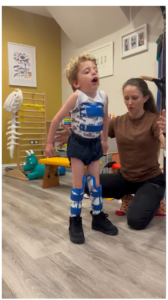
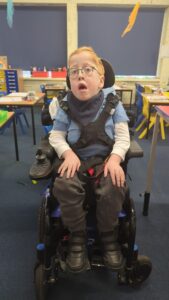
Rupert Ezra
Spinal care is changing as SMA treatment changes
Published evidence on the best approaches to spinal care in SMA remains limited, particularly for children with type 1 SMA who have received disease-modifying treatment. Their abilities and support needs vary widely, influenced in part by when diagnosis and treatment began. Some are learning to sit, stand or walk; others need substantial postural and movement support. Teams are still learning how spinal curves develop as these children grow and how best to respond.
The case discussions brought these questions to life. Neuromuscular teams and orthotists shared experiences of managing posture and fitting braces, while surgeons discussed approaches that allow continued growth as well as the benefits of spinal fusion at the right time. Respiratory and anaesthetic specialists explored preparation for surgery. Finding out late that a child needs additional nutritional support before surgery can go ahead can be stressful. Earlier conversations with dietitians, respiratory teams and spinal teams give families more time to prepare and may help avoid delays.

Robert Muni Lofra presenting the new spinal care guidance
A step towards more consistent spinal care
During the workshop we heard the fantastic news from Robert Muni-Lofra, chair of the SMA Care UK Spine Working Group, that the British Scoliosis Society have endorsed the new UK spinal care guidance for SMA. Covering children, young people and adults, it draws on research, clinical experience and patient and family input to support decisions on monitoring, seating, postural support, bracing and surgery. It also highlights research gaps, including how different braces affect posture and breathing. The guidance will now be published and work on a complimentary family guide can get started.
We also heard about the much needed study that will be looking at the natural history of spinal deformity in SMA, how it has changed since treatments from SMA started and what outcomes are being seen across the country.
Read more about the SMA Care UK project including how to get involved here.
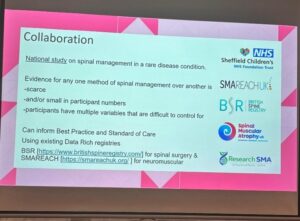
New collaborative research project, investigating data in spinal care.
I left Nottingham feeling grateful to the SMA clinicians who came together from across the UK. I was struck by their determination to collect the data we need to improve standards of care and by their willingness to share what they’re learning so that access to good spinal care depends less on where someone lives. As Ezra’s mum and as part of SMA UK, it meant a great deal to see that level of dedication to our community.
If you have not yet signed up to the SMA REACH database, but would like your, or your child’s data collected to support research and future innovation in SMA, you can find out more here.