 Rare Disease Day 2026: Moving from Awareness to Equity
Rare Disease Day is more than a date on the calendar, it is a global moment of solidarity for the 3.5 million people in the UK living with a rare condition. This year, the focus has shifted from simply being ‘seen’ to being treated fairly.
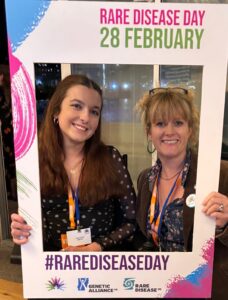
On February 24, 2026 SMA UK attended the Westminster reception which brought together patients, clinicians, and policymakers to discuss a hard truth: while rare diseases are individually rare, they are collectively common. Yet, our healthcare systems are still designed for the ‘average’ patient, leaving the rare community behind.
We also attend the Rare Disease Day event at Holyrood in Edinburgh on the 19th February. Joined by several rare disease charities, partners and clinicians and MSPs the event was opened with a moving speech from Emma who lives with Williams Syndrome.
Both Bob Dorris MSP and Jenni Minto MSP & Minister for Health spoke about the ongoing commitment of NHS Scotland to Improve the diagnostic journey particularly within the Rare context and supported the release of the Genetic Alliance Equity for Rare report.
The Rare Disease Day Equity Report: Key Takeaways
The latest report from Genetic Alliance UK, Equity for Rare, highlights that ‘fair care’ does not mean treating everyone the same, it means responding to individual needs. Here are the pillars of the equity call:
- Ending the Diagnostic Odyssey: On average, it takes four years to receive a rare disease diagnosis. Equity means shortening this window so patients aren’t left in a vacuum without support.
- Coordination of Care: Only 1 in 10 adults with a rare condition have a care coordinator. Patients are often forced to be their own project managers, juggling dozens of appointments across unconnected departments.
- Access to Treatment: With only 5% of rare diseases having a licensed treatment, equity requires a fairer pathway for drug appraisal that recognizes the unique challenges of small patient populations.
- Invisible Disabilities: Many rare conditions are unseen or progressive. Equity means ensuring that disability benefits, education, and workplace support recognise these fluctuating needs.
You can read the full report here.
The SMA Spotlight: A Lesson for the UK
Recently, Spinal Muscular Atrophy (SMA) has received much media attention and has been making waves in the political landscape. We’ve seen heartbreaking and hopeful stories of delayed access to life-changing gene therapies. While the spotlight on SMA is vital, it serves as a glaring example of a systemic failure: we are reacting to crises rather than preventing them.
The current spotlight must be a catalyst for the UK to realise that SMA is just the tip of the iceberg. There are hundreds of other treatable rare conditions, like MLD or ALD, where early detection is the difference between a healthy life and a devastating terminal prognosis.
Why the NSC System is No Longer Fit for Purpose
The National Screening Committee (NSC) is the gatekeeper of the heel prick test. However, as highlighted in the Genetic Alliance report, Newborn Screening for Rare Diseases, the current criteria used to evaluate new tests are outdated.
“The current system is built for common conditions and fails to account for the unique evidence base of rare diseases.”
The Problems with the Current System:
- The Effective Treatment Trap: The NSC often requires proof of a treatment’s effectiveness in a UK setting before screening is approved. But without screening, you can’t identify the pre-symptomatic babies needed to prove the treatment works. It’s a deadly Catch-22.
- Lack of Agility: While countries like the USA and Italy screen for over 40 conditions, the UK screens for just ten. Our rigid adherence to traditional evidence models is causing us to fall behind internationally.
- Inflexible Evidence Models: Rare diseases don’t have the luxury of large-scale clinical trials. The NSC needs to adopt a more pragmatic approach that weighs the cost of inaction against the rigor of data.
Rare Disease Day 2026 is a reminder that equity isn’t a luxury, it’s a necessity. We must reform our screening systems to ensure that no child’s future is determined by how ‘rare’ their condition is perceived to be.