At the end of September, SMA Care UK attended the 31st Annual Congress of the World Muscle Society (WMS) in Hiroshima, Japan, one of the major international meetings for clinicians and researchers working in neuromuscular conditions.
We went with two main aims: to share the work SMA Care UK is doing to improve and update standards of care for people living with SMA across the UK and to learn from the latest international research so that our guidance continues to reflect how SMA and its treatment are changing.
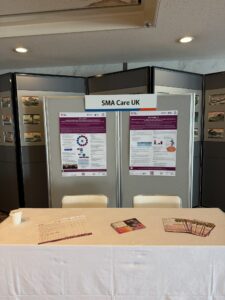
SMA Care UK had a strong presence at this year’s Congress. We were an official Congress supporter, had our own stand and presented six posters covering the overall programme and individual areas of care. But perhaps the greatest value of being at WMS was the opportunity to bring those two sides of our work together: sharing what we are doing in the UK while learning from research and experience elsewhere that can help shape what we do next.
Sharing SMA Care UK internationally
Our stand gave us the opportunity to talk to delegates about why SMA Care UK was established and how we are working with people living with SMA, families and healthcare professionals to develop practical, up-to-date guidance for care in the UK.
The introduction of disease-modifying treatments has transformed the outlook for many people living with SMA. Children and adults are living longer, some are achieving milestones that historically would not have been expected and the SMA population is becoming increasingly varied.
This is enormously positive, but it also presents new challenges for care. Much of the existing international standards of care was developed before these treatments were widely available. SMA Care UK is therefore looking at what good care should mean in this changing landscape and how we can reduce variation in care across the UK.
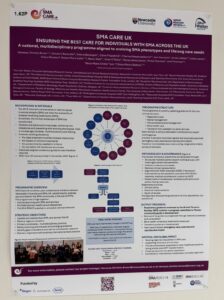
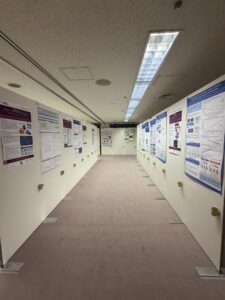
Seven SMA Care UK posters were presented at the WMS, covering the overall programme and our work on respiratory care, spinal management, hip management, bone health and transition from paediatric to adult services and exercise.
Although these are very different areas of care, a common theme runs through them: care increasingly needs to be individualised around a person’s function, symptoms, circumstances and priorities, rather than being determined primarily by their historical SMA type.
For example, our work on spinal and hip management is looking beyond X-rays alone to consider function, symptoms and the impact on everyday life. Our respiratory work recognises the need for surveillance across the lifespan, while our transition work is addressing the challenges young people can experience when moving from paediatric to adult services.
It was encouraging to see how closely many of these principles aligned with themes emerging from research presented elsewhere at the WMS.
What we learned about the changing face of SMA
One of the strongest messages from the Congress was just how rapidly the SMA landscape continues to change.
Studies presented longer-term and real-world experience with the three main disease-modifying treatments used in SMA (nusinersen, risdiplam and onasemnogene abeparvovec). Research continued to show the importance of treatment as early as possible, with particularly positive outcomes reported in children treated before symptoms develop.
There is also now a growing body of longer-term evidence. UK SMA REACH data, for example, examined children receiving nusinersen over four years, while other studies followed people who had received gene therapy over several years.
At the same time, the research showed that people’s responses to treatment can be very different. Treatment pathways are also becoming more complex, with some people receiving more than one therapy over time.
All of this has important implications for standards of care.
Successful treatment does not make standards of care less important; it makes responsive, individualised standards of care more important.
Disease-modifying treatments may change the course of SMA, but they do not necessarily remove respiratory, orthopaedic, nutritional, bone health or other needs. Instead, healthcare professionals increasingly need to understand the individual in front of them rather than relying on assumptions about what someone with a particular SMA type would historically have been expected to experience.
Looking beyond motor function
Another important theme was that we need to think more broadly about what a meaningful improvement looks like for someone living with SMA.
Traditionally, clinical studies have relied heavily on motor scales that measure physical abilities. These remain important, but they cannot capture everything that matters in everyday life.
Research presented at the WMS looked at areas including fatigue, respiratory and swallowing function, independence and individual goals, alongside traditional motor measures.
One particularly interesting project was SMA-Life, a new multidimensional assessment for adolescents and adults with SMA. Rather than measuring motor ability alone, it considers several areas including respiratory, swallowing, upper- and lower-limb function and fatigability.
Other researchers looked at individual goal-setting and patient-reported outcomes, recognising that an improvement that is very meaningful to an individual may not necessarily produce a large change on a conventional motor scale.
Researchers are also investigating new ways of monitoring SMA, ranging from blood and cerebrospinal fluid biomarkers to spinal cord imaging, electrophysiology, wearable movement sensors and smartphone-based assessments that could allow aspects of function to be measured remotely.
For SMA Care UK, this reinforces something fundamental to our approach: good care needs to consider what matters to the individual person, not simply what can be measured in a clinic.
Multidisciplinary care remains essential
There was also research with very direct relevance to our individual SMA Care UK workstreams.
Studies of gait and orthotics highlighted how treated children may now develop patterns of mobility that were much less commonly seen in the pre-treatment era. This means approaches to standing, contracture prevention and orthotic support may also need to evolve.
Other research addressed respiratory and swallowing function, bone health, neurodevelopment and pregnancy.
The work on pregnancy was particularly interesting because it illustrates a wider consequence of changing outcomes in SMA. As more women living with SMA consider pregnancy, healthcare teams increasingly need to address questions around treatment, respiratory and anaesthetic care, delivery and other aspects of multidisciplinary support.
New treatments are therefore not removing the need for supportive care. In some cases, therapeutic progress is creating entirely new care questions that previous standards did not have to address.
Hope and evidence we can trust
One of the most thought-provoking sessions I attended was called Trust, Transparency and Therapeutic Understanding.
Emily Reuben from Duchenne UK spoke from the perspective of patients and families. She described hope as an essential lifeline for families affected by progressive neuromuscular conditions but argued that meaningful hope must be built on trust.
Patients and families can face extraordinarily difficult decisions about taking part in research or starting a new treatment. They need clear information not only about potential benefits, but also about risks, uncertainty, setbacks and what researchers still do not know.
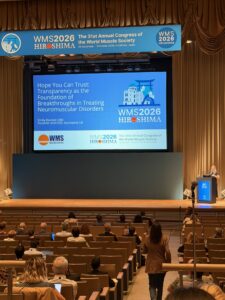
Kathryn Wagner from Johns Hopkins School of Medicine explored how patients and researchers can sometimes understand the potential risks and benefits of treatment differently, while Maryam Oskoui considered how emerging trial results should be interpreted and communicated.
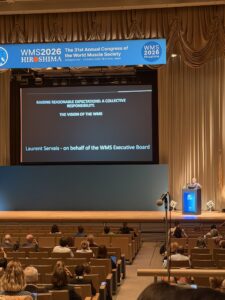
The importance of responsible communication was reinforced in a wider WMS discussion led by Laurent Servais on behalf of the WMS Executive Board, which described raising reasonable expectations as a collective responsibility. The principles presented included scientific integrity, independence, dialogue and collaboration, alongside caution in communicating efficacy and a commitment to comprehensive and open reporting. This provided a useful wider context for the session: responsibility for ensuring that patients and families can make informed decisions does not sit with any one group, but is shared across researchers, clinicians, industry, patient organisations and the wider neuromuscular community.
One message linked these presentations and the wider discussion: transparency is only valuable if it leads to genuine understanding. It is not enough to say that a result is statistically significant. We also need to ask how large the benefit is, how long it lasts, what the risks are, what remains uncertain and crucially, whether the outcome being measured is meaningful to people living with the condition.
This is highly relevant to SMA Care UK. Our guidance needs to be based on the best evidence available, but we also need to be open about where evidence is limited or uncertain. People living with SMA and their families need information they can understand and use when making decisions about their own care.
As Emily put it, what families ultimately need is “hope they can trust.”
Making international connections
Some of the most useful conversations at a congress happen outside the formal scientific sessions.
At the SMA Care UK stand, I met Mr Tamotsu Takeda, who lives with SMA and represents the Japan Muscular Dystrophy Association. He was particularly interested in SMA Care UK’s approach to improving care across the lifespan.
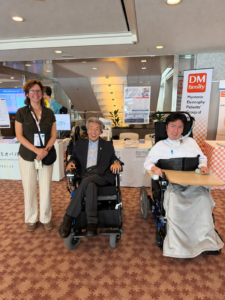
After the Congress, Tamotsu contacted me with further information about SMA guidance in Japan.
Japan published a Guide for the Management of Spinal Muscular Atrophy in 2022, which includes adults and covers areas including diagnosis, treatment, complications, rehabilitation, daily living and welfare support.
Tamotsu subsequently clarified, after speaking with a Japanese SMA specialist, that this is better considered a clinical handbook rather than a formally developed clinical practice guideline.
Importantly, Japan is now developing a new SMA guideline that will cover both children and adults.
Tamotsu has offered to remain in contact and exchange information as this work develops. This could provide a valuable opportunity for us to learn from one another as both countries consider how standards of care need to adapt to the changing SMA population.
It was a good example of why being physically present at an international meeting can matter: a conversation at the SMA Care UK stand has created a connection that may contribute to future international learning and collaboration.
Bringing the learning back to SMA Care UK
WMS 2026 gave us an important opportunity to raise awareness of SMA Care UK internationally and share the work already underway. Just as importantly, it gave us new evidence, ideas and connections to bring back to the programme.
A number of messages will help inform our work as the individual care workstreams progress.
Care needs to reflect changing SMA phenotypes rather than relying solely on historical classifications. It needs to remain multidisciplinary and extend across the lifespan. We need to look beyond traditional motor outcomes and consider symptoms, independence, everyday activities and individual priorities. And, as the evidence becomes increasingly complex, we need to communicate clearly about what we know, what we do not yet know and where uncertainty remains.
Above all, people living with SMA and their families need to remain central to this work. Their experiences and priorities are essential to ensuring that recommendations are not only scientifically robust but genuinely useful in everyday life.
The research we saw in Hiroshima strongly reinforced why SMA Care UK is needed. Treatments are transforming SMA, but care must evolve alongside them.
We will continue to follow the research and international developments highlighted at WMS as our workstreams progress – and build on the new relationships established in Hiroshima – to help ensure that people living with SMA across the UK receive the best possible care throughout their lives.
Research highlighted in this article
SMA Care UK posters
- Muni-Lofra, R. et al. (2026). SMA Care UK: ensuring the best management of spine for individuals with SMA across the UK. Poster 1.60P, 31st Annual Congress of the World Muscle Society, Hiroshima, Japan, 29 September–3 October 2026. WMS 2026
- Childs, AM.; Messer, B. et al. (2026). SMA Care UK: ensuring the best respiratory care for individuals with SMA. Poster 1.61P, 31st Annual Congress of the World Muscle Society, Hiroshima, Japan, 29 September–3 October 2026. WMS 2026
- Christie-Brown, V. et al. (2026). SMA Care UK: a national initiative to ensure that those living with SMA in the UK receive the best possible care. Poster 1.62P, 31st Annual Congress of the World Muscle Society, Hiroshima, Japan, 29 September–3 October 2026. WMS 2026
- Marini-Bettolo, C. et al. (2026). SMA Care UK: ensuring high-quality transition from paediatric to adult care in SMA, in the era of disease-modifying therapies. Poster 1.63P, 31st Annual Congress of the World Muscle Society, Hiroshima, Japan, 29 September–3 October 2026. WMS 2026
- Lilleker, J. et al. (2026). SMA Care UK: optimising bone health for individuals with SMA across the UK. ePoster 1.72eP, 31st Annual Congress of the World Muscle Society, Hiroshima, Japan, 29 September–3 October 2026. WMS 2026
- O’Reilly, E.; Vanegas, M. et al. (2026). SMA Care UK: management of hips in SMA in the DMT era – UK multidisciplinary consensus recommendations. ePoster 1.73eP, 31st Annual Congress of the World Muscle Society, Hiroshima, Japan, 29 September–3 October 2026. WMS 2026
-
Lilien et al. (2026). Developing exercise guidelines for spinal muscular atrophy: an SMA care UK initiative. ePoster 1.75eP, 31st Annual Congress of the World Muscle Society, Hiroshima, Japan, 29 September–3 October 2026. WMS 2026
Other SMA posters discussed in the report
- Martineau, O. et al. (2026). Orthotic management in spinal muscular atrophy (SMA) in the era of disease-modifying therapies. Poster 1.51P, WMS 2026, Hiroshima. WMS 2026
- Schofield, A., Sheehan, J., Smith, C. and Vanegas, M. (2026). Gait analysis in new cohort of paediatric ambulant spinal muscular atrophy type 1 and type 2 patients, and the role of orthotics. Poster 1.52P, WMS 2026, Hiroshima. WMS 2026
- Cicala, G. et al. (2026). Longitudinal serum neurofilament light trajectories following treatment initiation or modification in spinal muscular atrophy. Poster 1.54P, WMS 2026, Hiroshima. WMS 2026
- Lefeuvre, C. et al. (2026). Multi-domain response analysis of adult spinal muscular atrophy patients treated with risdiplam: insights from a real-world two-center French study. Poster 1.55P, WMS 2026, Hiroshima. WMS 2026
- Akbeyaz, H. et al. (2026). Timing of therapy in SMA type 1: longitudinal clinical and real-world insights. Poster 1.56P, WMS 2026, Hiroshima. WMS 2026
- Ardicli, D. et al. (2026). Neurodevelopmental outcomes and determinants in spinal muscular atrophy across the newborn screening era. Poster 1.057P, WMS 2026, Hiroshima. WMS 2026
- Wang, CH. et al. (2026). Association between cerebrospinal fluid neurofilament light chain levels and motor function in spinal muscular atrophy patients with 3–4 SMN2 copies. Poster 1.59P, WMS 2026, Hiroshima. WMS 2026
- Ramji, PP. et al. (2026). Adrenal and bone complications in paediatric patients living with spinal muscular atrophy – a single centre retrospective study. Poster 1.64P, WMS 2026, Hiroshima. WMS 2026
- Thiele, S. et al. (2026). Pregnancy outcomes and experiences in women with spinal muscular atrophy in the era of disease-modifying therapies: an international study. Poster 1.65P, WMS 2026, Hiroshima. WMS 2026
- Lopez Diaz, VI. and Meza-Cano, ME. (2026). Long-term real-world clinical and functional outcomes in adults with 5q spinal muscular atrophy treated with nusinersen. Poster 1.67P, WMS 2026, Hiroshima. WMS 2026
- Iwayama, H. et al. (2026). Early real-world adoption of high-dose nusinersen in patients with spinal muscular atrophy: patient preference and initial clinical observations from Japan. Poster 1.70P, WMS 2026, Hiroshima. WMS 2026
- Lee, S. et al. (2026). Real-world clinical outcomes of onasemnogene abeparvovec in Korean patients with spinal muscular atrophy: a 36-month retrospective nationwide cohort study. Poster 1.71P, WMS 2026, Hiroshima. WMS 2026
- Dupont, E. et al. (2026). Real-world 12-month outcomes of risdiplam in spinal muscular atrophy types 2 and 3: a Brazilian cohort. Poster 1.72P, WMS 2026, Hiroshima. WMS 2026
- O’Reilly, E. et al. (2026). Four-year trajectory of children with SMA receiving nusinersen in the United Kingdom. Poster 1.73P, WMS 2026, Hiroshima. WMS 2026
- Storgaard, J., Qerama, E., Tankisi, H. and Andersen, H. (2026). Electrophysiological biomarkers in spinal muscular atrophy. Poster 1.76P, WMS 2026, Hiroshima. WMS 2026
- McIntyre, M. et al. (2026). Beyond the clinic: multiday analysis of leg movement quantity and kinematic characteristics in infants with SMA and infants with typical development. Poster 1.77P, WMS 2026, Hiroshima. WMS 2026
- Da Graca, FF. et al. (2026). Longitudinal evaluation of cervical spinal cord MRI in adult 5q-SMA: potential biomarkers and pathophysiological insights. Poster 1.78P, WMS 2026, Hiroshima. WMS 2026
- Coratti, G. et al. (2026). Modelling treatment response trajectories in spinal muscular atrophy: results from the MAP THE SMA study. Poster 1.79P, WMS 2026, Hiroshima. WMS 2026
- Coratti, G. et al. (2026). Multivariable prediction of treatment response in type II SMA: beyond single outcome measures. Poster 1.80P, WMS 2026, Hiroshima. WMS 2026
- Ñungo Garzón, C. et al. (2026). Validation of a new multidimensional clinical outcome measure for evaluating adolescent and adult patients with spinal muscular atrophy. Poster 1.81P, WMS 2026, Hiroshima. WMS 2026
- Vazquez Costa, JF., Ñungo Garzón, NC., Aragon-Gawinska, K. and Pitarch Castellano, I. (2026). Patient-centered outcomes in adolescents and adults with spinal muscular atrophy treated with risdiplam. Poster 1.82P, WMS 2026, Hiroshima. WMS 2026
- Chetot, T. et al. (2026). Cell-free plasma proteomics reveal multi-dimensional biomarker signatures in spinal muscular atrophy: insights from the RHU SMART cohort. Poster 1.84P, WMS 2026, Hiroshima. WMS 2026
- Maruyama, R. et al. (2026). Efficient cellular and nuclear uptake and BBB crossing drive durable multi-organ rescue by DG9-PMO in SMA mice. Poster 1.085P, WMS 2026, Hiroshima. WMS 2026
- Nascimento Osorio, AE. et al. (2026). Integration of SMN2 structures and variants in the clinical platform of CuidAME in Spain: analysis of 276 SMA patients. Poster 1.86P, WMS 2026, Hiroshima. WMS 2026
- Jacob, M. et al. (2026). Using long-read sequencing to decipher the SMN2 locus in severely affected SMA patients. Poster 1.87P, WMS 2026, Hiroshima. WMS 2026
- Lemska, A., Studzinska, S. and Mazurkiewicz-Beldzinska, M. (2026). Real-world effectiveness of risdiplam in spinal muscular atrophy: a single-center experience compared with pivotal trials. Poster 1.88P, WMS 2026, Hiroshima. WMS 2026
- Darras, B. et al. (2026). Intravenous and intrathecal onasemnogene abeparvovec for presymptomatic and symptomatic spinal muscular atrophy (SMA): long-term follow-up. Poster 1.89P, WMS 2026, Hiroshima. WMS 2026
- Proud, C. et al. (2026). Final results from RESPOND: study of nusinersen in children with spinal muscular atrophy previously treated with onasemnogene abeparvovec. Poster 1.90P, WMS 2026, Hiroshima. WMS 2026
Invited presentations
Trust, transparency and therapeutic understanding
- Reuben, E. (2026). Hope you can trust: transparency as the foundation of breakthroughs in treating neuromuscular disorders. Invited presentation 09INV, Trust, transparency and therapeutic understanding, 31st Annual Congress of the World Muscle Society, Hiroshima, Japan, 2 October 2026. WMS 2026
- Wagner, K. (2026). From trials to treatment: Risk–benefit misestimation across the therapeutic lifecycle. Invited presentation 10INV, Trust, transparency and therapeutic understanding, 31st Annual Congress of the World Muscle Society, Hiroshima, Japan, 2 October 2026. WMS 2026
- Oskoui, M. (2026). Data, disclosure, and the meaning of benefit in NMD trials. Invited presentation 11INV, Trust, transparency and therapeutic understanding, 31st Annual Congress of the World Muscle Society, Hiroshima, Japan, 2 October 2026. WMS 2026
Personal communication
- Takeda, T. (2026). Personal communication with Vanessa Christie-Brown during WMS 2026 regarding current and developing SMA clinical guidance in Japan. October 2026.
Other
- World Muscle Society (2026). 31st Annual Congress of the World Muscle Society, Hiroshima, Japan, 29 September–3 October 2026. WMS 2026